Your fermenter — the vessel where yeast turns sugary liquid into beer — is arguably the single piece of equipment with the most direct impact on what ends up in your glass. Most homebrewers start with a plastic bucket: cheap, functional, and honestly fine for your first dozen batches. But as your palate sharpens and your ambitions grow, the bucket’s limitations start showing up in your beer. Oxygen sneaking in through a scratched interior. No easy way to cold crash (rapidly chill the beer to drop sediment before packaging) without disturbing the settled yeast. No ability to ferment under pressure, a technique that speeds lagers and reduces the fruity off-flavors that warm fermentation can produce. This guide maps the entire upgrade path — from a better bucket all the way to a glycol-ready pressure conical — with honest tradeoff framing at each step so you can make one deliberate purchase instead of buying three vessels over five years.
Why the Fermenter Is Often the Last Thing Brewers Upgrade (and Why That’s a Mistake)
Most homebrewers spend their early upgrade dollars on the brew kettle, the burner, or a grain mill. The fermenter stays a bucket because the bucket works. This is rational — your fermentation environment (temperature, sanitation) matters more than the vessel’s material — but it also obscures a real ceiling.
The American Homebrewers Association’s fermentation vessel guide identifies three categories of quality loss that trace directly back to vessel limitations: oxygen pickup during transfers, inadequate temperature management, and difficulty harvesting or washing yeast for reuse. Once you’re brewing regularly — say, two to four batches a month — these aren’t theoretical concerns. They compound. A batch of IPA that oxidizes during a clumsy bucket transfer loses the very hop aroma you built your recipe around. A lager that can’t cold crash properly requires an extra week of conditioning time and still finishes hazy.
Brew Your Own magazine’s comparison of fermenter types notes that the jump from plastic bucket to a well-sealed stainless vessel consistently reduces oxidation-related complaints among intermediate brewers, even when brewing technique stays otherwise identical. That’s the signal. The vessel is constraining you before your technique is.
The Four Tiers of Homebrewing Fermenters
Think of the upgrade path as four distinct levels. Each one unlocks a specific capability. You don’t have to climb all four — stop wherever the return on investment stops mattering to you.
Tier 1: The Plastic Bucket ($10–$30)
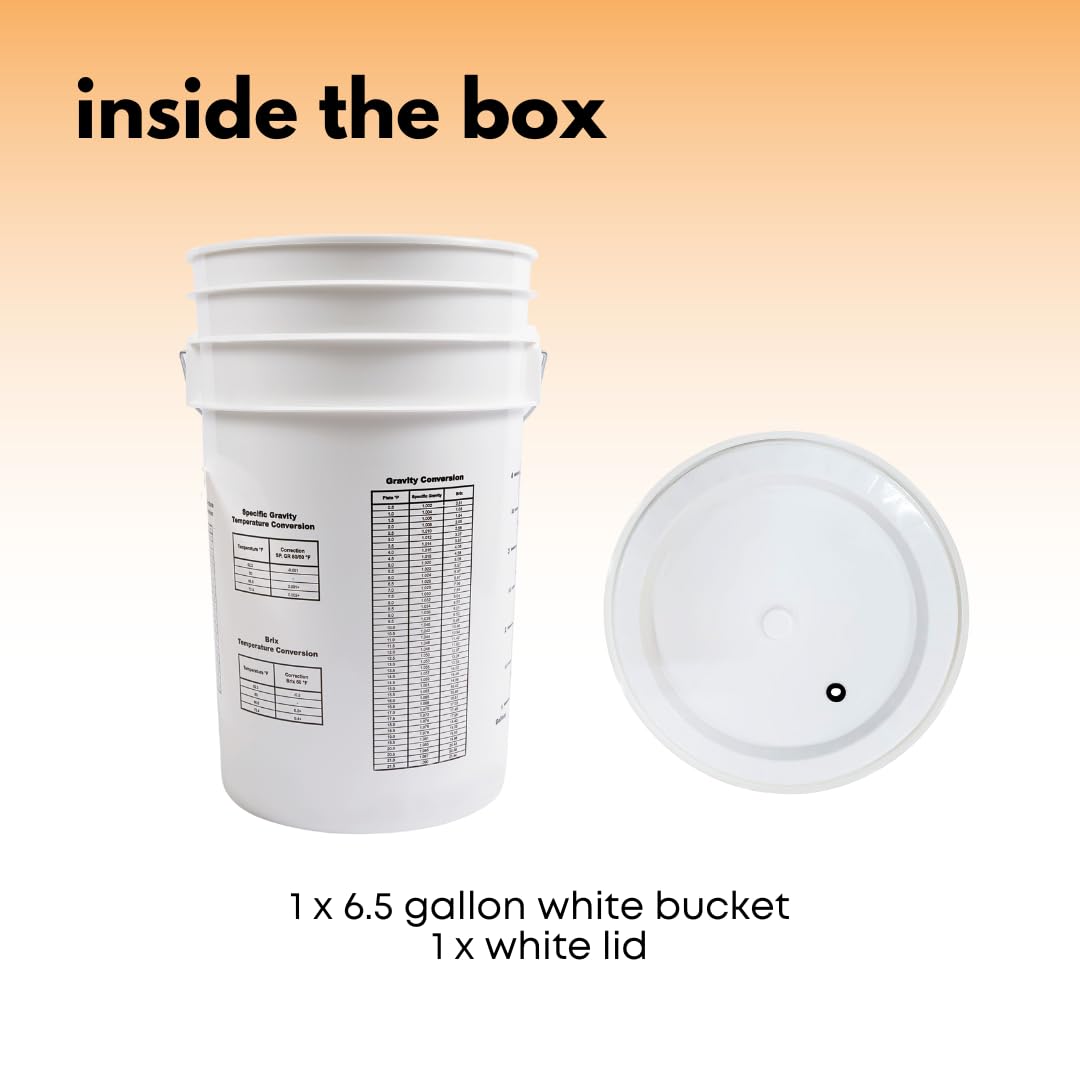
The classic. Food-grade HDPE (high-density polyethylene, a type of hard plastic rated safe for food contact). Ferments beer. Does its job. The problems are structural: plastic scratches, and scratches harbor bacteria that no amount of sanitizer fully reaches. The lid seals loosely. There’s no airlock port on most standard buckets without modification. Cold crashing pulls oxygen in through the lid gap as the beer contracts. If you’re still here, you know this vessel.
When to stay: You’re brewing fewer than once a month, or you’re still dialing in recipe fundamentals and don’t yet have consistent temperature control. No point buying better fermentation hardware until your fermentation chamber (a temperature-controlled space like a converted chest freezer) is sorted.
Tier 2: Better Plastic and Entry-Level Glass/PET ($25–$80)
The Better Bottle (a rigid PET plastic carboy) and glass carboys occupy this tier. Glass is non-porous — it won’t scratch and harbor bacteria the way HDPE does — and its transparency lets you watch fermentation activity directly. PET plastic carboys offer similar non-porosity without the glass breakage risk.
The limitation here is oxygen transfer at the airlock. Standard three-piece airlocks bleed oxygen during cold crashing. Upgrading to a solid stopper with a one-way check valve (a small valve that lets CO₂ out but blocks air from entering) solves most of this. MoreBeer’s fermenter selection guide recommends this stopper upgrade as the highest-value $5 improvement you can make to any carboy setup.
Tradeoff to name explicitly: Glass is fragile. A dropped glass carboy full of beer is a dangerous, expensive disaster. If you’re doing anything athletic with your fermentation setup — moving vessels around a garage, cold crashing in a chest freezer — PET reduces risk meaningfully.
Tier 3: Stainless Conical Fermenters ($150–$600)
This is where the path diverges sharply between brewers who want convenience and brewers who want capability.
A conical fermenter is shaped like an inverted cone at the bottom. That geometry isn’t aesthetic — it’s functional. Yeast and trub (the sediment that collects during fermentation, made up of dead yeast, protein, and hop material) fall into the cone and can be drained off through a dump valve without disturbing the beer sitting above. This means:
- Cold crashing without oxygen pickup. You chill the beer, everything drops into the cone, you dump it, and you’re left with clear beer ready to package — all without opening the vessel.
- Yeast harvesting. Collect the yeast cake from the dump valve, rinse it, and repitch into your next batch. At current malt and ingredient prices (May 2026), reusing a healthy yeast starter from a previous batch saves $8–$14 per batch in liquid yeast costs.
- Dry hopping through a top port. Add hops directly without opening the fermenter to ambient air.
By the numbers — Tier 3 conical ROI estimate:
| Benefit | Per-Batch Value |
|---|---|
| Yeast repitch savings | $8–$14 |
| Reduced losses from oxidation / clarity | ~$3–$6 (ingredient value) |
| Time saved on transfers | 20–40 min |
| Break-even vs. $250 conical | ~20–25 batches |
At two batches a month, you’re breaking even in roughly a year. At four batches a month, under six months.
Owners of the Ss Brewtech Brewmaster Bucket (an entry-level stainless option with a flat bottom but superior sealing to plastic) consistently report a meaningful jump in beer clarity and a reduction in the off-flavors associated with yeast autolysis (when yeast cells begin to break down and impart unpleasant, meaty, or rubbery flavors — something that happens when beer sits too long on a large, undisturbed yeast cake). The conical geometry reduces that risk by letting you pull the majority of the yeast out mid-fermentation.
The Anvil Crucible 7.5-gallon and the Spike Conical CF5 are the two names that dominate this tier in aggregated homebrewing reviews for the intermediate buyer. Published spec comparisons put the Anvil at a slightly lower entry price with simplified fittings; the Spike CF5 ships with tri-clamp compatible ports (a type of sanitary fitting standard in commercial brewing, allowing tool-free attachment of valves, hoses, and accessories), which matters if you anticipate scaling toward nano-brewery-adjacent workflows. If tri-clamp compatibility is on your roadmap, the Spike’s port standard is worth the price delta.
Tier 4: Pressure-Ready Conicals ($400–$1,200+)
This is the ceiling of homebrewing fermentation capability, and it unlocks a technique that experienced brewers in the Brulosophy community have been experimenting with for several years: pressure fermentation.
Under pressure (typically 10–15 PSI, measured in pounds per square inch — a standard unit for gas pressure), many ale yeasts produce noticeably fewer esters (fruity compounds that develop during fermentation). This means you can ferment a lager-style beer at ale temperatures — around 65–68°F instead of the 48–54°F a traditional lager requires — and get a cleaner result without needing a dedicated cold fermentation chamber. Brulosophy’s documented split-batch experiments consistently show that pressure-fermented ales at slightly elevated temperatures are difficult to distinguish from temperature-controlled equivalents in triangle tests (a sensory test where tasters try to identify the odd sample among three).
Craft Beer & Brewing’s explanation of pressure fermentation also notes a secondary benefit: the pressurized environment naturally carbonates the beer as fermentation completes, reducing the need for a separate forced carbonation step. For brewers kegging directly from the fermenter, this is a meaningful workflow simplification.
What pressure-ready actually means: The vessel must be rated for internal pressure, typically 15 PSI working pressure with a safety relief valve. Standard conicals — even quality stainless ones — are NOT rated for pressure. Do not attempt pressure fermentation in a vessel not explicitly rated for it. The Fermzilla All Rounder (from KegLand) and the Unitank line from Ss Brewtech are the two most-cited pressure-rated options in this category. The Fermzilla sits at the accessible end of this tier in terms of price; the Ss Brewtech Unitank represents a commercial-adjacent build quality with glycol jacket compatibility for external temperature control.
The decision frame for Tier 4: You need this level if: (a) you want to ferment lager profiles without a dedicated cold chamber, (b) you’re kegging and want to eliminate a carbonation step, or (c) you’re building toward a nano-brewery workflow that requires documented, repeatable pressure fermentation logs. If none of those apply yet, Tier 3 is the practical ceiling.
The Variables That Should Drive Your Decision
Temperature control first. If you don’t yet have your fermentation temperature managed — a chest freezer with an external temperature controller like an Inkbird ITC-308 is the standard entry point — buy that before upgrading your fermenter. Brew Your Own magazine’s analysis of fermentation quality variables consistently ranks temperature control above vessel material in impact on finished beer character. A plastic bucket at 67°F beats a conical at ambient room temperature in summer.
Batch frequency. If you brew fewer than once a month, the yeast repitch economics don’t pencil out for a premium conical. If you’re brewing weekly or more, they do — clearly.
Your kegging setup. Pressure fermenters pair naturally with kegging. If you’re still bottling, the carbonation workflow benefit of pressure fermentation disappears, and Tier 3 is likely your optimum.
Tri-clamp on your roadmap? If you’re thinking about nano-brewery licensing in the next three to five years, standardize on tri-clamp fittings now. Retrofitting a collection of non-standard ports later is expensive and annoying.
The Clear Decision Rule
- Still on plastic, brewing occasionally: Upgrade your stopper and cold crashing technique before spending anything on a new vessel.
- Brewing 1–3 times a month, kegging or planning to: A mid-tier stainless conical (Anvil Crucible or equivalent) is the one purchase that pays for itself. Buy it once.
- Brewing 3+ times a month, doing lagers or pilsners, or eyeing nano-brewery scale: Go directly to a pressure-rated vessel with tri-clamp ports. The Tier 3 stop is a money-losing detour at your volume.
- Gift buyer researching for an enthusiast partner: A Tier 3 conical paired with a temperature controller is the premium gift that an intermediate brewer almost certainly hasn’t bought themselves yet — and it’s the upgrade that visibly improves their beer.
The fermenter path is one of the few equipment progressions in homebrewing where going one tier higher than you think you need today tends to pay off. Beer is patient. Buy the vessel you’ll be proud of in three years.