If you’ve been homebrewing for any amount of time, you’ve probably had the same thought after bottling your forty-eighth bottle at 11 PM on a Tuesday: there has to be a better way. There is. Kegging means transferring your finished beer into a stainless steel pressure vessel — called a keg — that serves as both the storage container and the dispense system. You connect a small cylinder of CO₂ (carbon dioxide gas) to the keg, carbonate the beer inside, and pour it on demand through a tap. No individual bottles to sanitize, no sugar priming calculations, no waiting two weeks for carbonation to develop. For a hobbyist who brews more than once a month, a kegging setup typically pays for itself in time and frustration savings within the first handful of batches. This guide focuses on the most common homebrew format — the ball lock keg — walks through how to set up a basic system, explains why pressure transfers matter for beer quality, and tells you honestly when the more serious plumbing of tri-clamp fittings is worth adding to your workflow.
What a Ball Lock Keg Setup Actually Looks Like
A basic ball lock system has four moving parts: the keg itself, a CO₂ regulator, gas line and liquid line, and a faucet or picnic tap to pour from. That’s it at its simplest. Understanding what each piece does saves you from buying the wrong version.
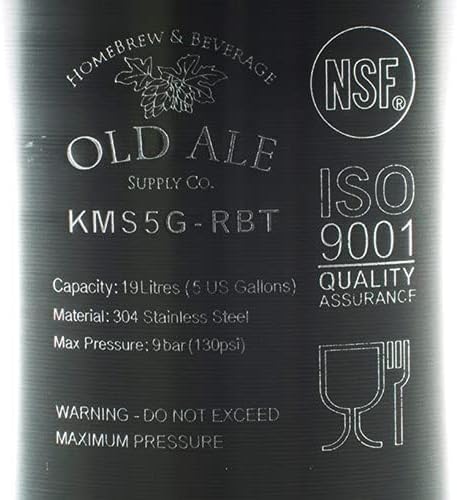
The keg: Ball lock kegs — sometimes called “Cornelius kegs” or “Corny kegs” after a now-defunct brand — hold 5 gallons (about 19 liters), which maps neatly to a standard homebrew batch. They have two posts on the lid: a gas-in post (marked “IN”) and a liquid-out post (marked “OUT”). The posts use spring-loaded connectors that snap on and off with a quarter-turn, which is what gives them the “ball lock” name. The alternative format, pin lock, uses a twist-and-push connector and is mostly found in older used equipment from Coca-Cola fountains. Ball lock is the current standard for new equipment and has the widest accessory ecosystem.
The regulator and CO₂ tank: A dual-gauge regulator screws onto a CO₂ cylinder and lets you set two pressures independently — typically one line for serving (around 10–12 PSI for most ales) and one for force-carbonating. A single-gauge regulator is cheaper but shows only the tank pressure, not what’s hitting your keg. For anyone running more than one keg, a dual-body regulator (also called a “manifold regulator”) splits into two independently adjustable outputs. At mid-2026 pricing, a quality dual-body regulator from a brand like Taprite or Kegland runs $80–$140.
By the numbers:
- 5 lb CO₂ tank: serves roughly 8–10 five-gallon batches before refill
- Typical serving pressure for ale (at 38°F / 3°C): 10–12 PSI
- Force carbonation at room temperature (68°F): 30 PSI for 24–48 hours, then reduce to serving pressure
- Entry-level 5-gallon ball lock keg (new): $80–$110; used/reconditioned: $40–$65
Per the Homebrewers Association’s packaging documentation, oxygen exposure during transfer is the single largest controllable variable in homebrew quality post-fermentation — which leads directly to the next section.
Why Pressure Transfer Changes Your Beer Quality
Here’s the tradeoff you need to understand before you set up your first keg: gravity transfers (siphoning or pouring from one vessel to another with no gas assist) expose your finished beer to atmospheric air. Air contains oxygen. Oxygen reacts with beer after fermentation to produce stale, cardboard-like off-flavors — a process called oxidation. For hop-forward beers like IPAs and hazy pale ales, this can strip or mute aroma compounds within days of packaging.
A pressure transfer uses CO₂ to push beer from your fermenter into a pre-purged keg without the beer ever contacting air. The mechanics are simple: you pre-purge the receiving keg by filling it with CO₂ (vent several times, then pressurize), connect the liquid-out post of the keg to the fermenter’s outlet via tubing, and apply low CO₂ pressure to the top of the fermenter — typically 3–5 PSI — to push beer through. The liquid falls into a CO₂ atmosphere in the keg rather than into open air.
Brew Your Own Magazine’s guide to kegging notes that this method, sometimes called a “closed transfer,” is one of the highest-leverage technique upgrades available to the intermediate brewer, because it addresses a quality problem that more expensive fermentation equipment alone cannot solve. Brulosophy’s empirical homebrewing research has documented noticeable sensory differences between oxidized and non-oxidized transfers in blinded triangle tests, particularly in hop aroma and perceived freshness.
What you need to run a pressure transfer:
- A fermenter with a liquid outlet you can connect tubing to (most conical fermenters, including the Anvil Bucket Fermenter and Ss Brewtech Chronical, have this by default)
- A way to apply low-pressure CO₂ to the top of the fermenter — either a gas post adapter or a purpose-built spunding valve
- A short length of 3/8” ID silicone tubing and a ball lock disconnect to connect fermenter to keg
For brewers using a standard plastic bucket fermenter, a spigot-to-ball-lock adapter and a CO₂ inlet through the lid (via a drilled stopper or gas-in fitting) is a workable low-cost upgrade. It’s not as elegant as a conical, but it gets the job done.
If you care about hop aroma: a pressure transfer setup is not optional. It’s the single most cost-effective upgrade you can make to a kegging workflow.
Ball Lock vs. Tri-Clamp Fittings: When to Upgrade the Plumbing
This is where the decision tree branches, and it’s worth being honest about who actually needs tri-clamp fittings versus who’s buying them because they look professional.
Ball lock fittings use the push-and-click connectors described above. They’re purpose-built for homebrewing, they’re cheap ($4–$12 per disconnect), they’re easy to take apart and sanitize, and they work reliably with standard silicone tubing. For the vast majority of homebrewers running 5-gallon batches on a corny keg system, ball lock plumbing is the correct answer.
Tri-clamp fittings (also called “TC fittings” or “sanitary fittings”) are a different plumbing standard borrowed from commercial dairy and brewing. A tri-clamp connection uses a flanged ferrule, a silicone gasket, and a three-piece clamp that tightens around both flanges. The result is a fully sanitary, tool-optional connection that can be disassembled, cleaned, and reassembled in seconds without any threading. Craft Beer & Brewing’s coverage of small-scale production operations consistently notes that tri-clamp plumbing is the baseline sanitation standard for any brewery subject to state licensing inspection.
The honest tradeoff matrix:
| If you are… | Ball lock is… | Tri-clamp is… |
|---|---|---|
| Brewing 5-gal batches at home | The right call | Overkill |
| Running a Grainfather or Anvil Foundry | Sufficient for most transfers | Worth it at pump/chiller connections |
| Using a unitank or glycol-ready conical | Needed for keg connections | Essential for fermenter plumbing |
| Operating or planning a nano-brewery | A stopgap | Required for compliance and cleaning |
MoreBeer’s equipment overview documentation draws the same functional line: tri-clamp enters the picture when you’re working with equipment that ships with TC ferrules from the factory (most Ss Brewtech and Spike Brewing conicals do, in their professional-tier configurations) or when you need to connect a pump, heat exchanger, or glycol jacket inline.
The practical upgrade path: If you own an Ss Brewtech Chronical or Spike Brewing CF10 conical, the fermenter likely already has 1.5” tri-clamp ports. In that case, building a TC-compatible transfer arm (a bent stainless dip tube terminated in a TC ferrule) costs around $25–$40 in parts and connects cleanly to a TC-to-ball-lock adapter at the keg end. You get sanitary plumbing on the fermenter side — where contamination risk is highest — while retaining the simpler ball lock connections at the keg.
For anyone running an all-in-one electric system like the Grainfather G40 or Anvil Foundry 10.5, the mash/boil vessel itself is not where your tri-clamp investment pays off. It’s the cold-side plumbing — from the fermenter outlet onward — where oxygen exposure and cleaning dead zones matter most.
Building Your System: A Staged Decision Framework
Rather than a gear list, here’s a decision framework based on where you are right now.
Stage 1 — First keg system ($200–$350 total): One or two reconditioned ball lock kegs, a single-body regulator, a 5 lb CO₂ tank, a picnic tap or short draft line. Get carbonation dialed in. Learn your serving pressure at your refrigerator temperature. This is the setup that replaces bottling and nothing else.
Stage 2 — Closed transfer and quality focus (add $50–$100): A spunding valve or gas-in adapter for your fermenter lid, plus proper disconnects and silicone tubing for a closed transfer setup. This is where the quality improvement per dollar spent is highest. Operators who’ve documented blinded tasting comparisons on platforms like Brulosophy’s forum consistently report this upgrade has more perceptible impact on hop-forward styles than almost any fermentation equipment upgrade.
Stage 3 — Draft system and serving consistency (add $100–$300): A keezer or kegerator conversion, a dual-body regulator, 3/16” ID beverage line sized to your serving pressure, and a proper Perlick or Intertap faucet. Now you have a system that serves like a bar tap.
Stage 4 — Sanitary plumbing for scale (add $150–$400+ in fittings): Tri-clamp connections at your conical fermenter, an inline pump with TC connections, and transfer arms with sanitary dip tubes. This is the stage that bridges toward nano-brewery workflows and is necessary if your equipment already ships with TC ports.
The Decision Rules
If you care about getting off bottles fast and without complexity, buy two used ball lock kegs and a basic regulator. You’ll be pouring draft beer within a week and you haven’t overcomplicated anything.
If you care about hop aroma and freshness in pale ales or hazy IPAs, the closed transfer setup is non-negotiable — and it’s a $50–$80 add-on, not a major investment. The Homebrewers Association’s packaging guidance and the empirical tasting data from Brulosophy both point to the same conclusion: oxygen at packaging is where most homebrew quality falls apart, and pressure transfer is the fix.
If you care about scaling toward a licensed operation or you’re already running a Spike or Ss Brewtech unitank with TC ports, invest in tri-clamp plumbing on the cold side now. It’s not about aesthetics — it’s about sanitation compliance, dead-zone-free cleaning, and equipment that won’t require a retrofit when your inspector shows up.
And if you’re still not sure whether kegging is worth the upfront cost: a two-keg ball lock setup at mid-2026 pricing runs roughly $300–$400 all-in for a new system, or $150–$200 if you source used kegs and a reconditioned regulator. Amortized across even twenty batches, the per-batch cost is a rounding error compared to buying bottle caps, priming sugar, and the Tuesday nights you’d spend at the bottle wand.